
When children first begin learning to read, mastering CVC words (consonant-vowel-consonant words) is a key milestone. “Cat,” “dog,” and “pen” seem like simple words, but for early readers, these words open the door to understanding how sounds blend together to form words. Practicing with simple sentences using CVC words builds confidence, improves decoding skills, and helps young readers transition from reading isolated words to understanding full thoughts.

In this blog post, we’ll explore what CVC words are, why practicing them in sentences is beneficial, tips for practicing, examples you can use right away, and even a few fun activities and free printable resources to support your teaching or homeschooling journey!
What Are CVC Words?
CVC words are three-letter words made up of a consonant, a vowel, and a consonant, in that order. These words are typically the first type of words taught when children are learning to read because they follow predictable phonetic patterns. Examples of CVC words include:
- cat
- pen
- big
- dog
- run
The structure of CVC words makes them ideal for teaching children how to “sound out” words, one phoneme (sound) at a time. Because there are no tricky blends, silent letters, or complex vowel teams, CVC words give beginning readers an approachable starting point for developing their phonics skills with short vowels! Kindergarten students are usually ready to read CVC words and decodable sentences after they know all of the letter sounds. First grade students will review these words too!
You can read more about teaching CVC words and print CVC word lists in this post, CVC Words: Lists and Printable Free Activities for Teaching.
Why Practice with Simple Sentences?
While reading individual CVC words is an important first step, combining them into sentences offers even more powerful learning opportunities. Here are a few reasons why practicing simple CVC sentences is so important:
Fluency Building
Reading words within sentences helps children practice reading more smoothly and quickly, moving toward fluency. It’s also a great way to practice sight words and practice recognizing sentence structure.
Comprehension Skills
Sentences provide context, helping children understand that reading is not just about saying words but about understanding meaning.
Confidence Boost
Successfully reading a full sentence is a huge confidence booster for beginning readers!
Natural Language Exposure
Sentences introduce the flow and rhythm of language, setting the stage for more complex reading later on.
Examples of Simple CVC Sentences
Here are ready-to-use CVC sentences, grouped by short vowel sounds:
Short A:
- The cat sat.
- Pam had a map.
- Dad and Sam ran.
- A bat is in the bag.
- Dan can tap.
Short E:
- Ben met Ted.
- The hen is red.
- Jen fed the pet.
- Ned let the men in.
- The vet gets a pen.
Short I:
- The pig hid.
- Tim is in a big pit.
- Kim hit the lid.
- The kid did a jig.
- The fig is big.
Short O:
- Mom got a pot.
- Tom sat on a log.
- The dog jogs to Bob.
- A hot fox ran.
- The box is on top.
Short U:
- The bug dug.
- Gus runs up.
- The sun is up.
- A cup is on the rug.
- The pup can tug.
These simple sentences allow children to practice recognizing and blending CVC words in a fun way while gaining exposure to sentence structure.
Printable Sentences with CVC Words
These CVC Word Sentence Scrambles are the perfect activity for Kindergarten students learning to read simple sentences with CVC words, short vowels, and sight words.

Students will put the words in order to form simple sentences, then write the sentence on the coordinating response sheet. 30 sentences are included in this resource covering Short A, Short E, Short I, Short O, Short U, and a combination of all of the vowels. High-frequency words are also included in these simple sentences!
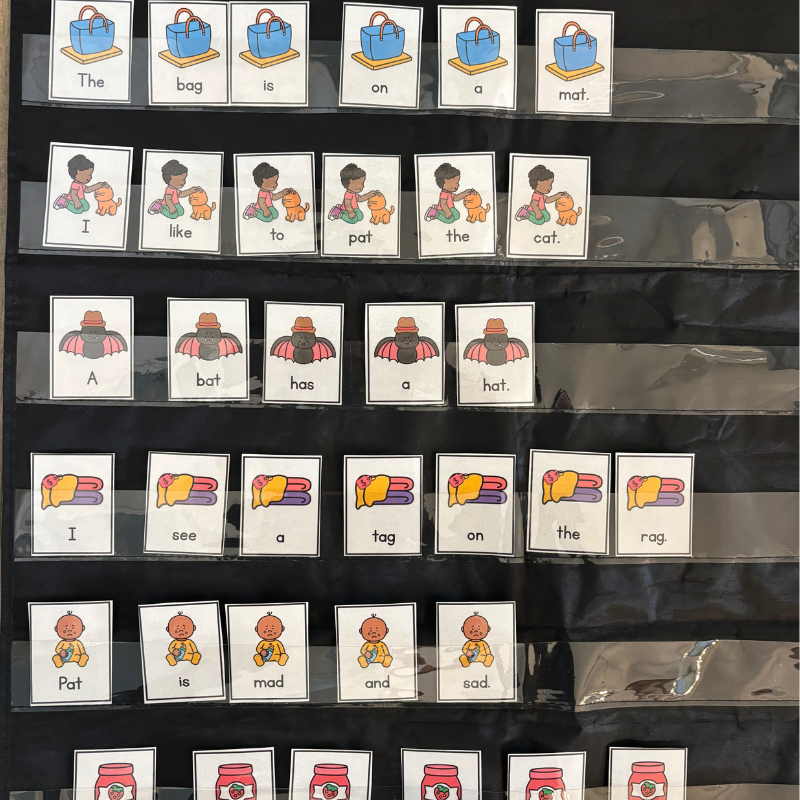
The set includes:
- 6 Short A CVC Sentences with Response Sheet
- 6 Short E CVC Sentences with Response Sheet
- 6 Short I CVC Sentences with Response Sheet
- 6 Short O CVC Sentences with Response Sheet
- 6 Short U CVC Sentences with Response Sheet
- 6 Short Vowel CVC Sentences with Response Sheet
To make practice even more hands-on and engaging, these printable CVC sentence cards are a must-have resource!
How to Use This Resource:
This is a great resource to use in a literacy center with a

This resource can also be introduced in a small group setting or completed during whole group time as a class. It could even be sent home for extra practice!
Fun Extension Activities
Once your child or students are confidently reading CVC sentences, you can keep the excitement going with some simple extension activities!
CVC Sentence Picture Matching
Encourage students to write their own sentences including words from CVC word cards. They can even draw a picture to match their sentence for independent work.
Act It Out
After reading a sentence, have children act it out! This builds comprehension and adds some movement to your lesson which is helpful for younger students.
Tips for Using CVC Sentences in Reading Practice
Helping young readers build confidence with CVC sentences can be both fun and rewarding. Here are some tips to maximize learning and engagement:
Read Aloud Together
Reading together models fluent, expressive reading for your child. Start by reading each sentence yourself while they listen, then invite them to repeat after you. This “echo reading” strategy allows them to hear how words flow naturally. You can also read sentences together at the same time, building their confidence and reducing the fear of making mistakes. Make it playful by using different voices or acting out the sentences!
Point to Each Word
Finger tracking is an essential strategy for early readers. Encourage your child to point under each word as they read it aloud. This reinforces the left-to-right direction of English and strengthens the connection between spoken and written language. For added fun, use a “reading wand” like a colorful pointer to make tracking more engaging.
Reread for Fluency
Fluency doesn’t happen overnight. Encourage children to reread the same CVC sentences several times across a few days. Rereading helps words become more familiar, leading to faster recognition. You can make this fun by timing how long it takes to read all the sentences and trying to beat the time, or by using a “fluency tracker” to celebrate improvements. Encourage students to reach each sentences at least a second time.
Discuss the Sentence
After reading a sentence, take a moment to talk about it. Ask simple comprehension questions like: “Who is in the sentence?” “What happened?” or “Where do you think this is taking place?” This practice helps children move beyond decoding into understanding meaning, an essential component of true reading success. You could also encourage them to draw a quick picture of the sentence to deepen comprehension.
More CVC Word Activities
If you’re looking to keep early readers engaged, try incorporating these additional CVC activities into your routine:
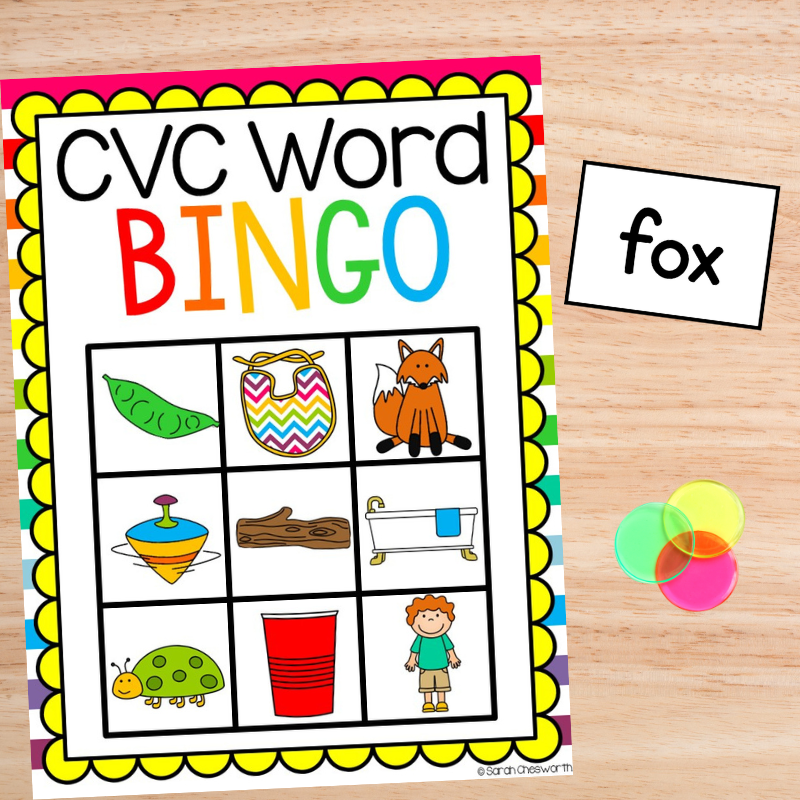
CVC Word Bingo
Create bingo cards with different CVC words. Call out the word, and have children find and mark it on their card. This game helps with word recognition and listening skills! I have this resource ready to print and go in my TPT store for you!
CVC Word Hunt
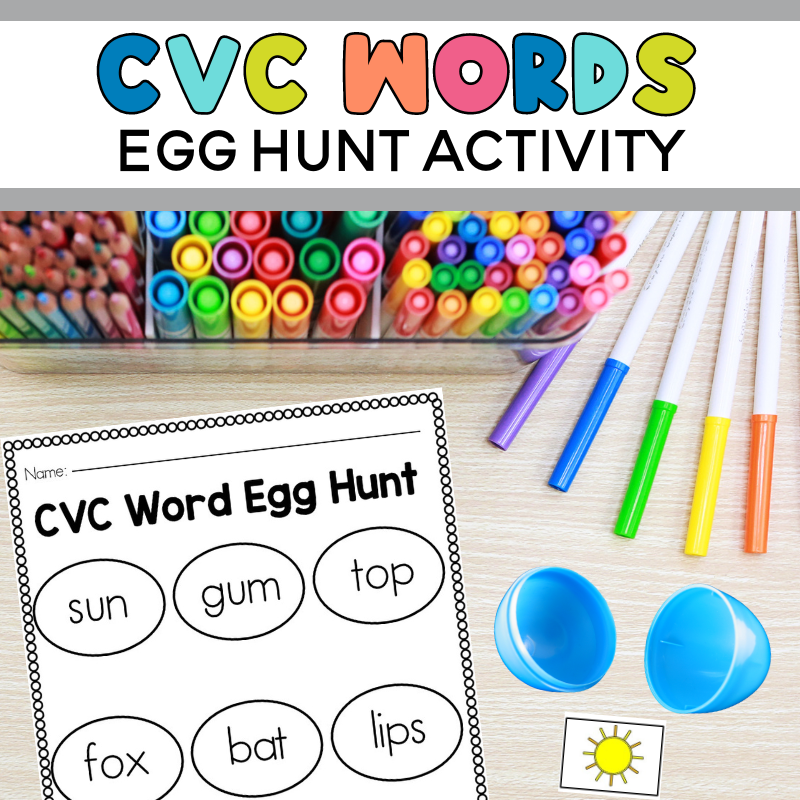
If you are teaching and reviewing CVC words in the spring add this resource to your lesson plans! Children will love this fun CVC Word Egg Hunt!
CVC Word Matching
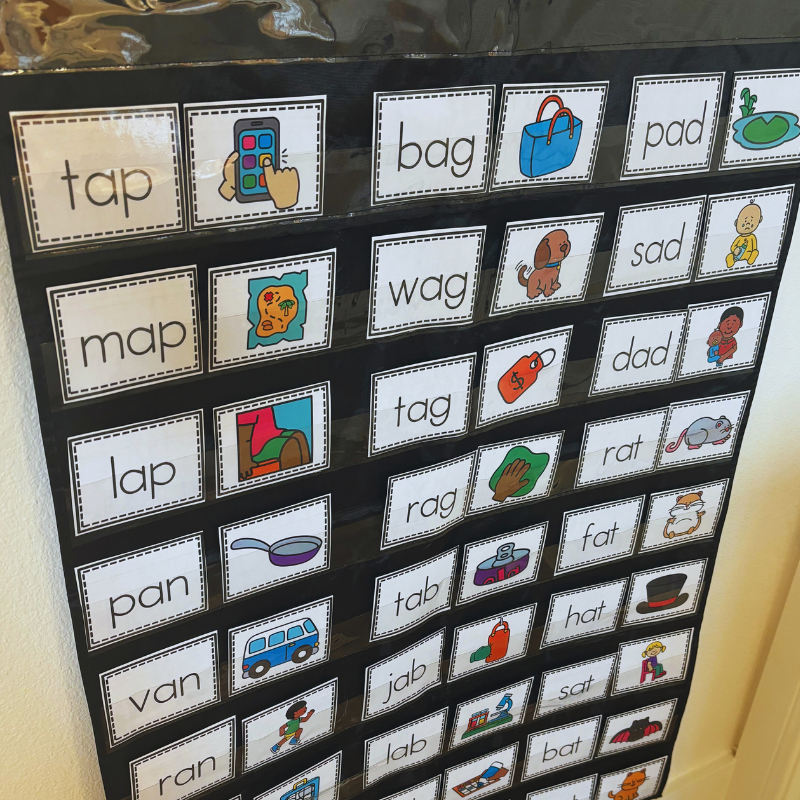
Beginning readers will love using these CVC Word Picture Match cards to practice reading CVC words! Students will read each CVC word and find the matching picture. Headers are included for students to sort CVC words and/or pictures by short vowel sound or ending sound word family. These cards could also be used as flash cards.
CVC Printables for Stamping
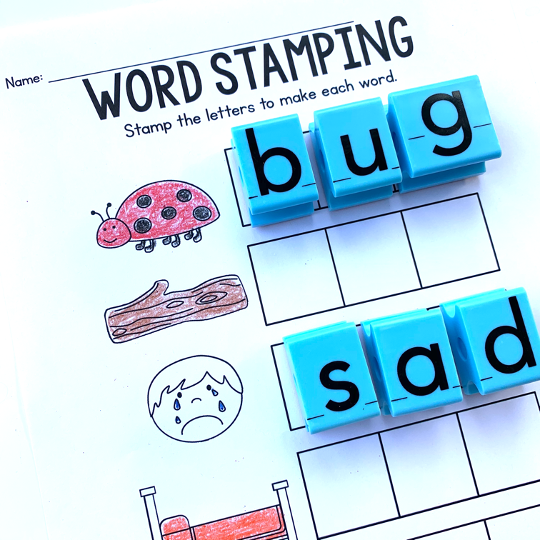
For this activity, students will stamp and spell the CVC word that goes with each picture! You could even give students two different stamp pad colors and encourage them to stamp the consonants and vowels in different colors.
Reading Sentences with CVC Words: Final Thoughts
Learning to read is an incredible journey, and mastering CVC words through simple sentences is one of the first, most important steps. Practicing CVC sentences not only builds decoding skills but also boosts fluency, phonemic awareness, comprehension, and confidence.
Remember, short and consistent practice sessions are key. Celebrate every small success with your readers. Each new sentence they master is a step closer to becoming a lifelong reader!
Don’t forget to grab these CVC sentence cards to make your reading practice fun, varied, and effective. Happy reading!